-
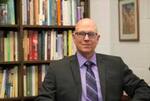
Enhancing Graduate and Undergraduate Teaching
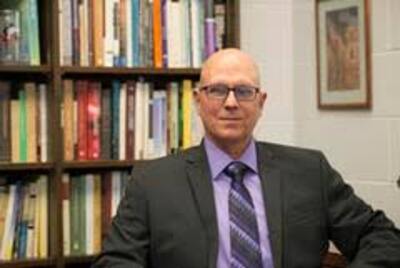
Mylan Engel
This seminar offers a chance to learn from one of NIU’s thoughtful and inspiring Presidential Teaching Professors. Dr. Engel’s insights into critical thinking, student transformation, and the purpose of higher education will leave you motivated, energized, and equipped with new strategies for your own teaching or student support work.
-

Learning the Right Way to Ride the Wrong Bicycle: Some Reflections on Teaching at NIU
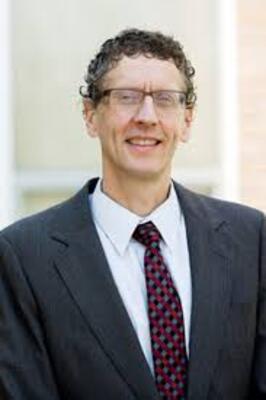
Brianno Coller
I wanted to become an engineer the moment I first saw the immense size and scale of the bridges of San Francisco with my own eyes. I imagined the audacity of the humans who said “Yep, we can do that…” and did. As an undergrad, I wanted to study advanced mathematics because it scared the bejesus out of me, but I was in awe of the insights it could reveal. I got to teach for the first time as a graduate student, and realized the process of learning is every bit as complex and chaotic as the turbulent boundary layers I was studying for my dissertation. And witnessing students have those “A-ha” moments — it still sends a jolt of endorphins through my veins. I’ve been at NIU for 20-plus years now. Teaching Engineering Dynamics and Computational Methods for the 200th time is still a joy because I make it different almost every semester. Selfishly, I try to infuse whatever happens to be my fascination du jour into the classroom experience. It often works out well. Sometimes not so well. In this seminar, I share one of those (good) experiences. The talk will have an engineering bent. But, at its core, it is about engaging students while exploring interesting problems, something we educators can all strive to do.
-

Nurturing Student Agency
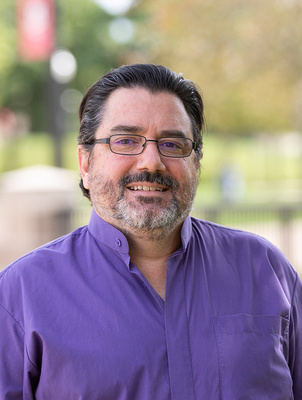
Thomas Smith
An increasingly important educational goal among educators involves nurturing the quality of “student agency.” Two concepts integral to student agency are proactivity (as opposed to passivity) as well as “co-agency,” whereby students develop agency in a context of mutually supportive social relationships with their teachers, peers and communities. Rapid and profound changes in education and culture (e.g., remote learning, generative AI, expansion and diversification of information sources) have made a focus on student agency even more relevant and critical to consider. Professor Smith will share his experiences and reflections on the role of student agency in education.
-

"Oh, Is That What You Want?": Clarifying Student Expectations For Our Assignments and Studying
Mary Anne Britt
Many of us assume that the instructions for tasks we give students are clear and will help them begin the development of the thinking and reading skills expected within our discipline. My research in the lab and classroom, however, shows that this is not always the case. What I have found is that students need more direction about instructors’ specific goals, which are rarely conveyed directly to students. In this talk I share a model of reading for a purpose that I have developed with my colleagues, including evidence that helping students more clearly understand the disciplinary goals for reading can help students learn. I also discuss how you might use this model to help students learn more autonomously.
-
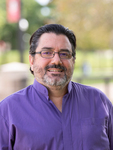
Gems of Inestimable Value
E. Taylor Atkins
Contrary to "populist" opinion, we still need expertise; but experts must recognize their own limits with humility and be open to the "gems" students bring to the classroom, which can enhance our own understanding and the ways we communicate our knowledge to others. On the best days in the classroom, the learners teach, and the teacher learns.
In this seminar, E. Taylor Atkins shares two quotations that form the core principles of my teaching philosophy and practice. As much as he enjoys the performative aspects of teaching, he is guided by the belief that all students possess "gems of inestimable value" within themselves, many of which they do not realize are there. He works to identify those and help pull them out. He shares some of the assignments and activities he has created (or in some cases, borrowed and adapted) to mine those gems.
The Presidential Teaching Professor Award is the highest honor a faculty member can receive at NIU for outstanding contributions to teaching. Each fall and spring semester one Presidential Teaching Professor award recipient delivers a seminar to share his or her teaching experience and expertise.
Printing is not supported at the primary Gallery Thumbnail page. Please first navigate to a specific Image before printing.